Commercial Moves in West Kensington
If you are planning commercial moves in West Kensington, you already know that relocating a business is very different from moving a home. Offices, retail units, studios, consultancies, clinics, and shared workspaces all come with their own routines, equipment, deadlines, and access concerns. The right move needs careful planning, the right lifting methods, and a team that understands how to work around busy streets, tight entrances, loading constraints, and the need to keep disruption to a minimum.
West Kensington is a practical, busy part of London where many businesses operate in mixed-use buildings, mansion blocks with commercial units, converted spaces, and modern office settings. That means a successful move is not only about transport. It is about timing, protection, coordination, and making sure your business can get back to work as quickly as possible. Whether you are relocating a small office, moving shop stock, or transferring equipment between sites, a local service can make the whole process smoother and far less stressful.
Our approach to commercial moving services in West Kensington is designed around real business needs: careful packing, clear scheduling, secure handling of furniture and files, and practical support on moving day. If you are searching for a team that understands local access issues and can work efficiently in a commercial environment, contact us today to discuss your move and request a free quote.
Commercial removals designed around West Kensington businesses

Every business move begins with a different set of priorities. Some clients need to move outside business hours to reduce downtime. Others need help with fragile IT equipment, archive storage, or specialist items that cannot be handled like ordinary furniture. In West Kensington, the range of premises is broad, which is why a one-size-fits-all approach rarely works well.
We support local businesses with commercial removals that are planned around the space, access, and volume involved. That may mean moving desks from a compact office near a high street location, clearing stock from a retail space, or carefully transferring equipment from one floor to another in a shared building. A good move should feel organised from start to finish, not rushed or improvised.
For many customers, the biggest concern is downtime. A delayed move can interrupt customer service, staff productivity, and trading hours. That is why local business movers who understand West Kensington can be particularly helpful. They know the area’s traffic patterns, parking restrictions, and the kind of loading arrangements that can affect timing. In busy areas, those details matter just as much as the van size.
What types of business moves do we help with?
We regularly support a wide variety of business relocations, including:
- Office moves for small teams, growing companies, and established firms
- Retail unit relocations and stock transfers
- Studio and creative workspace moves
- Professional practices such as consultancies and agencies
- Light commercial premises and shared work environments
- Internal business moves, floor relocations, and reconfiguration projects
Why local knowledge matters for commercial moves in West Kensington
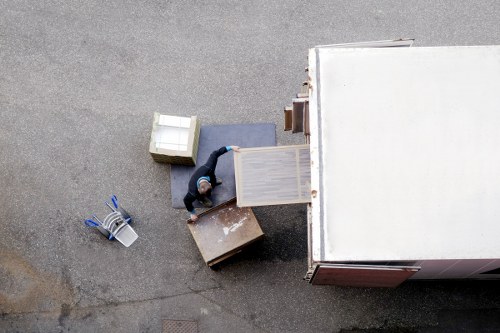
West Kensington presents the kind of moving conditions that reward preparation. You may be dealing with narrow residential streets, larger roads with limited stopping options, basement access, upper-floor premises, lift restrictions, or busy shared entrances. Even a well-organised business relocation can lose time if the mover does not understand the practical layout of the area.
Local knowledge helps in several ways. It supports better route planning, more realistic arrival windows, and smoother loading or unloading. It also helps with the common challenges that commercial clients face in this part of London, such as coordinating around schools, commuter traffic, controlled parking zones, and delivery schedules in mixed-use buildings. A team that works locally is more likely to anticipate these issues before moving day.
For commercial customers, that can mean fewer surprises and better control over the process. If your office is near West Kensington station, close to the A4 corridor, or within reach of nearby business and residential districts such as Barons Court, Earl’s Court, Hammersmith, Fulham, or Kensington Olympia, a mover with area familiarity can adapt more quickly when access is tight or timing changes.
Common local access challenges
Businesses moving in and around West Kensington often need help with:
- Limited roadside loading space
- Controlled parking and permit-based streets
- Steps, narrow hallways, and awkward internal turns
- Shared entrances and building access windows
- Lift booking requirements in multi-storey buildings
- Busy footfall around commercial and residential mixed-use properties
These practical issues are exactly where a local team can add value. The move may look straightforward on paper, but the details often determine whether the day runs smoothly or becomes disruptive.
What is included in our commercial moving service

A professional business relocation should do more than simply move items from point A to point B. It should protect your equipment, reduce disruption, and make the transition clear for staff and managers. Our commercial moving service can be tailored to the size of your premises and the type of items being moved.
Depending on your requirements, the service may include packing support, furniture disassembly, careful wrapping, secure lifting, transport, and placement at the destination. For businesses with more complex needs, we can also help with planning the order of the move so that essential items are available first and non-essential items follow.
Attention to detail matters when moving business assets. Office chairs, filing cabinets, monitors, printers, conference tables, stock, samples, retail fixtures, and specialist tools all need different handling. Good planning reduces the risk of damage and helps your team return to work more quickly.
Typical inclusions
- Initial discussion to understand the move requirements
- Move planning based on access, timing, and volume
- Packing assistance for office and business items
- Protection for furniture, surfaces, and fragile items
- Loading, transport, and unloading at the new premises
- Reassembly support where agreed in advance
- Placement of items in the right area to help setup
Optional support for different business needs
Some commercial customers need extra help with archive boxes, IT-sensitive items, shelving, or furniture that must be moved in a specific sequence. Others require an evening or weekend relocation to keep business interruptions down. A flexible service makes it easier to match the move to your operating hours and internal deadlines.
How commercial moves work from start to finish

Business customers often want clarity. They want to know what happens first, how long the move may take, and what they need to do before moving day. A good process makes the whole experience easier for everyone involved. Instead of dealing with guesswork, you can prepare your staff and coordinate the move around your schedule.
The process usually begins with an assessment of what needs to be moved and how the premises are arranged. This may be done through a discussion, site review, or detailed inventory depending on the size of the job. From there, a moving plan can be shaped around access times, parking, floor levels, and any special handling requirements.
Once the plan is agreed, the focus shifts to packing, protecting, and labelling. Clear labels are particularly useful for office and commercial moves because they help direct items to the right room, floor, or department. That saves time on the other side and reduces the stress of unpacking in a new setting.
Step-by-step process
- Discuss your move and outline the type of business, volume, and timing needs.
- Review access conditions such as lifts, stairs, loading space, and parking rules.
- Plan the move order so important items are prioritised.
- Pack and protect furniture, files, stock, and equipment appropriately.
- Load and transport items securely to the new premises.
- Unload and position items where they need to be for setup and reopening.
Good communication throughout the process makes a substantial difference. When a move is managed properly, staff know what to expect and can continue working with less interruption.
Preparing for a business relocation in West Kensington

Preparation is one of the most valuable parts of any commercial relocation. The earlier you begin organising the move, the easier it is to keep track of equipment, files, stock, and practical concerns such as building access. Businesses in West Kensington often operate from compact, busy spaces, so preparation can save time on both sides of the move.
If your workplace contains confidential paperwork, electronics, display items, or specialist equipment, it helps to sort and label everything before the moving team arrives. A well-planned preparation routine can also make unpacking quicker in the new premises, which is important if you need to reopen or resume customer service quickly.
For companies moving from mixed-use buildings or converted properties, it is also worth checking building rules in advance. Some premises require advance lift bookings, specific arrival times, or protection on communal floors and entrances. The more clearly these requirements are understood, the smoother the move will be.
Preparation checklist for commercial customers
- Confirm the move date and time window
- Notify staff about packing responsibilities and access arrangements
- Back up important data and secure confidential files
- Label boxes by department, room, or priority level
- Disconnect and prepare electronics in line with your internal procedures
- Check parking, loading, lift, and building access arrangements
- Set aside essential items needed immediately after arrival
Tip: If you have fragile or high-value items, mention them early so the move can be planned with the right care and equipment.
What businesses often overlook
It is easy to focus on the furniture and forget the smaller details that affect the first day in the new premises. These might include keys, access cards, chargers, printers, kettle supplies, temporary signage, or the order in which teams need to be set up. Thinking through those details in advance can make the difference between a chaotic first morning and a smooth restart.
Why choose a local company for commercial removals?
There are many reasons local customers prefer a nearby team for business relocations. A local company is easier to brief, quicker to respond, and more likely to understand the day-to-day conditions that affect moving in West Kensington. For time-sensitive commercial work, that practical familiarity is a real advantage.
Local movers are often more adaptable when plans change. If your building access window shifts, if your parking arrangement needs adjusting, or if staff need support with last-minute items, a team based around the area can usually respond more efficiently than a distant crew unfamiliar with the local roads and property types.
There is also a customer service benefit. Commercial clients often need straightforward communication, realistic scheduling, and a team that understands the pressure of keeping a business running. A local move provider can offer that mix of responsiveness and practical problem-solving.
Benefits of choosing a West Kensington-based moving team
- Better knowledge of local streets, access points, and parking issues
- More suitable timing options for nearby business customers
- Faster response if the move requires updates or changes
- Experience with offices, shops, studios, and mixed-use buildings
- More practical planning for busy London conditions
For many businesses, local experience is not a luxury; it is part of a successful move.
Commercial move types we commonly support in the area
West Kensington has a varied business landscape, and the property types reflect that. Some customers operate from standalone offices, while others work from converted townhouses, basement units, retail spaces, or shared commercial floors. We tailor the move to fit the property and the work being done there.
Different industries also bring different priorities. A design studio may need careful handling for screens, art materials, and furniture. A retail customer may need stock moved in a specific order. A professional office may need archives, desks, and computers handled with a clear setup plan. A clinic or consulting practice may need a quiet, discreet relocation that protects client confidentiality and service continuity.
Understanding these variations is essential when planning commercial moves in West Kensington. The more accurately the move reflects your daily operations, the easier it becomes for your team to settle into the new premises without losing momentum.
Examples of local commercial relocation needs
- Office furniture relocation
- Business stock and shelving moves
- Reception and waiting area moves
- Archive and file room relocation
- Workstation and desk reconfiguration
- Commercial equipment transport
- Internal floor-to-floor moves
Supporting both small and growing businesses
Not every commercial move involves a full building relocation. Some customers simply need to move into a larger unit, change floors, or reorganise an existing workspace. Others are relocating due to expansion, lease changes, or a shift in working style. Whatever the reason, a thoughtful moving plan can help keep the process calm and controlled.
Pricing factors for commercial moves
Commercial moving costs can vary because every business move is different. Rather than assuming one standard rate fits all, it is better to look at the main factors that influence the work involved. This gives you a clearer picture of what affects the quote and helps you compare services fairly.
Some of the most common pricing factors include the volume of items, the distance between premises, the complexity of access, and the amount of packing or dismantling required. Moves that involve upper floors, limited parking, or specialist handling naturally take more coordination than straightforward ground-floor relocations.
Transparency matters. A good quote should reflect the practical details of your move so that there are fewer surprises later. If you are arranging a business relocation in West Kensington, it is useful to share as much detail as possible from the start so the estimate can be tailored properly.
Factors that can affect the quote
- Size of the business move
- Number and type of items being moved
- Packing and protective wrapping requirements
- Access restrictions at either property
- Need for stairs, lifts, or carrying over longer distances
- Timing requirements, including evenings or weekends
- Disassembly and reassembly needs
- Special handling for fragile or sensitive items
Requesting a detailed quote early can help you plan budgets and schedules with more confidence.
How to keep disruption low on moving day
One of the main goals in any commercial move is to reduce downtime. Businesses often need to keep operations moving, serve customers, or reopen as quickly as possible. Careful staging and a sensible move order can help limit disruption significantly.
Start by identifying the items that are needed first. These might include key computers, printers, reception items, customer-facing materials, or core workstations. Then separate less urgent items so they can be moved later or unpacked after the most important spaces are ready. This approach helps your team resume normal routines more quickly.
Communication is also important. Staff should know what is happening, when access will be limited, and which items they should keep with them. Businesses with front-of-house operations may also need temporary signage or an alternative customer process during the move. Those small steps can make the day feel more organised and less disruptive.
Practical ways to reduce downtime
- Move non-essential items in advance if possible
- Keep essential documents and electronics clearly separate
- Label boxes by priority and destination room
- Arrange access and parking before moving day
- Prepare a short setup list for the new premises
- Assign one person to coordinate decisions on the day
When the move is structured properly, your team can spend less time searching for items and more time getting back to business.
Areas covered around West Kensington
Businesses in West Kensington often need moving support across nearby districts as well as within the local area itself. Because commercial premises are spread across different road layouts and building types, local movers can be especially useful when a move involves more than one nearby location.
We commonly help customers moving in and around West Kensington, as well as nearby areas such as Barons Court, Hammersmith, Fulham, Kensington Olympia, Earl’s Court, Shepherd’s Bush, and parts of Kensington and Chelsea. This wider local reach is useful for businesses relocating between nearby offices or transferring stock and equipment across different sites.
If your premises are close to a main route, tucked away on a quieter street, or situated in a mixed commercial-residential building, a team familiar with the area can plan accordingly. That way, the move stays practical whether you are changing one office floor or relocating an entire business unit.
Local property types we often see
- Converted office spaces
- Retail units with storage rooms
- Managed workspaces and shared offices
- Upper-floor commercial rooms
- Ground-floor business premises in mixed-use buildings
- Light commercial and professional service spaces
Frequently asked questions about commercial moving services
Businesses planning a relocation usually have similar questions, especially if this is their first commercial move or if the premises are more challenging than a standard office. Below are some of the most common questions asked by local customers.
How far in advance should we book a commercial move?
It is best to book as early as possible, especially if you need a specific date, out-of-hours timing, or weekend scheduling. Early booking also gives more time for planning access, packing, and staff preparation.
Can you move office furniture and electronic equipment?
Yes, office furniture and electronic equipment can usually be moved safely with the right planning and protection. It helps to mention computers, monitors, printers, and other sensitive items in advance so they can be handled appropriately.
Do commercial moves need to happen outside business hours?
Not always, but many customers prefer evening or weekend moves to reduce downtime. The best timing depends on your business model, building access, and how quickly you need to reopen.
Can you help with packing as well as transport?
Many commercial customers ask for packing support because it saves staff time and helps protect items properly. If you need help with files, stock, furniture, or fragile items, it is useful to discuss that at the quote stage.
What should we do with confidential documents?
Confidential files should be separated, labelled, and secured according to your internal procedures before the move. Many businesses also choose to keep sensitive paperwork under the control of a nominated staff member throughout the process.
What if our building has difficult access?
Difficult access is common in West Kensington and nearby parts of London. Stairs, lifts, narrow entrances, and parking restrictions can all be planned around if they are identified early. Sharing those details upfront helps avoid delays.
Still unsure about the right approach?
If you have a move coming up and want to talk through the details, request a free quote and let us help you plan the most efficient way forward.
Choosing the right time for your move
Timing can make a major difference to how smoothly a business move goes. In West Kensington, timing should take into account traffic, staff availability, building rules, and any customer-facing commitments you need to keep. For some businesses, early morning is ideal. For others, a phased relocation over several hours or a weekend makes more sense.
Many commercial customers also like to move in stages. This can work well when an office is still in use, when stock needs to remain available, or when different departments are being relocated separately. Staged moving often helps reduce pressure on staff and keeps essential functions running for longer.
Choosing the right time is not just about convenience; it is about protecting productivity. The more carefully the move is timed, the easier it becomes to avoid lost trading hours and last-minute stress.
Good timing questions to ask yourself
- Will the business remain open during part of the move?
- Do you need staff to work from the new premises immediately?
- Are there delivery or building access windows to consider?
- Would a weekend move reduce interruption?
- Do certain items need to arrive first for reopening?
If your move involves multiple departments or a busy customer schedule, plan the move around the least disruptive time possible.
Book your commercial move in West Kensington
When you are relocating a business, you need a moving partner who understands both the practical and operational sides of the job. West Kensington customers often face tight schedules, limited access, and varied building layouts, so it helps to work with a team that knows how to plan around those realities.
From office removals and retail relocations to flexible commercial transport and packing support, the right service can help reduce stress and keep your move on track. If you are ready to plan ahead, contact us today to discuss your requirements and request a free quote tailored to your business move.
Whether you are moving a small office, a larger commercial unit, or a specialist workspace, we can help you organise the process clearly and efficiently. Book your service now and take the first step toward a smoother relocation in West Kensington.